How Can I Get ChatGPT to Recommend My Business? A Practical Guide for Business Owners
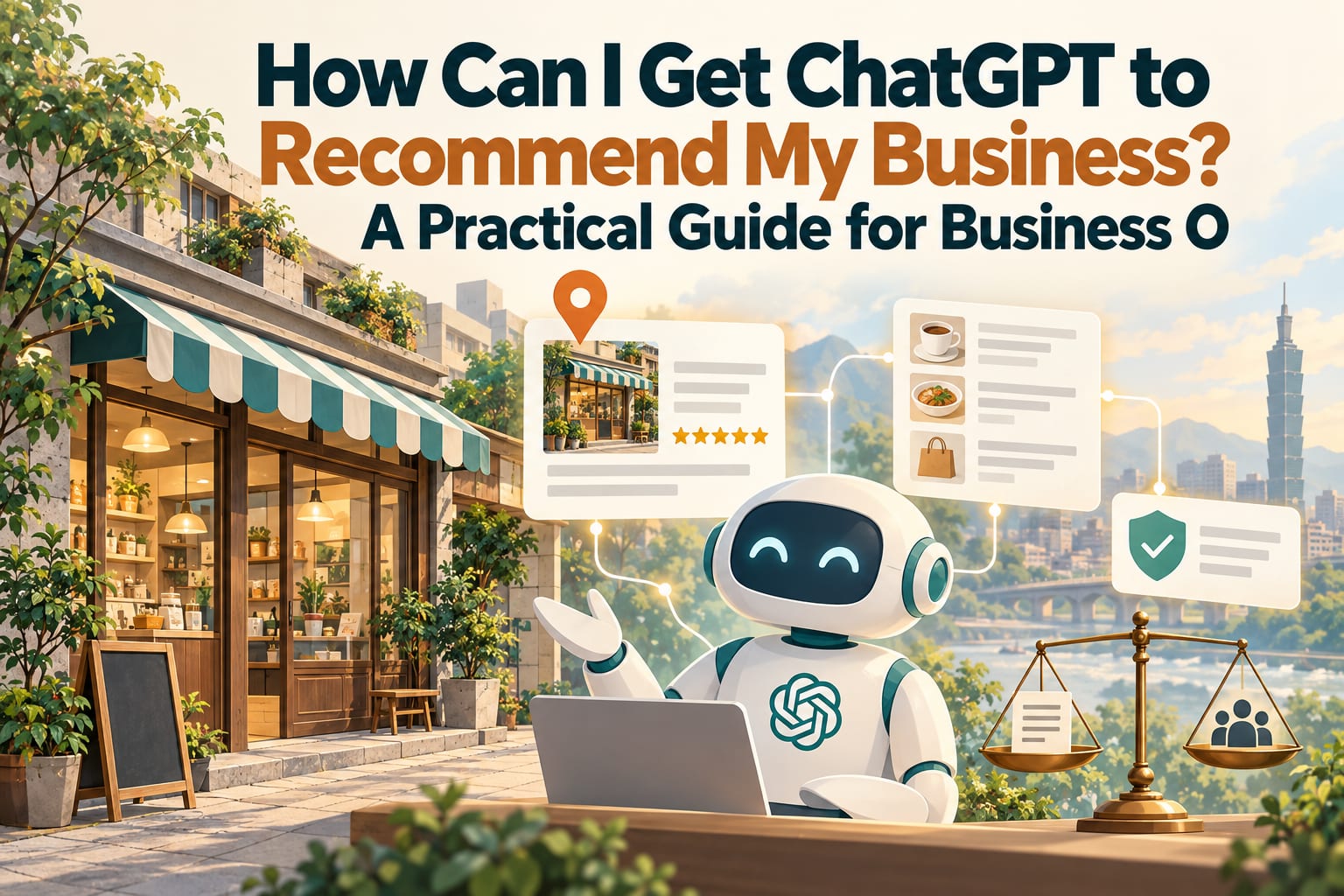
To get ChatGPT to recommend your business, start by making your business information easy to find through public searches, clearly relevant to customer needs, and backed by verifiable evidence. This can improve the conditions for being found and accurately described, but it cannot guarantee a recommendation; answers also depend on the user's question, whether search is used, and the information retrieved at that time. This article walks you through organizing your business information, rewriting your website content, and checking the results with real questions.
Is There an Application Shortcut to Getting ChatGPT to Recommend Your Business?
Do not think of it as a list where submitting information puts you in line for a spot. Your job is to make sure the information online can answer three questions: who you are, who you are suited for, and why you should be trusted.
For example, “a café in Taichung” only describes a category; “a café in Taichung's West District with power outlets on weekdays, suitable for working alone” comes closer to a customer's selection criteria. The goal is not to squeeze ChatGPT into every paragraph, but to clearly explain your service scope, limitations, and differences.
Steps One Through Five: What Can Business Owners Do?
Compile your basic business information. In a shared document, list your official business name, address, phone number, opening hours, services, prices or pricing method, and booking method. If you work without a physical storefront, list your service area and how you provide online services instead; there is no need to disclose your home address. Once finished, check that your website, social media, and business profiles are consistent, prioritizing corrections to old addresses, old phone numbers, and outdated prices.
Put important information on public webpages. Create or update the “Services,” “Contact,” and “Frequently Asked Questions” pages on your official website. Do not put your menu only in images, or keep prices and booking conditions exclusively in private messages. If you do not have an official website, start by organizing a publicly accessible business page. Once finished, open it in a browser while logged out to confirm that unfamiliar visitors can also read the text and find your contact information.
Write content around questions customers would ask. Answer three to five real questions on your service page, such as “Do you accept bookings for one person?”, “Is there an elevator?”, or “What does the quote include?” Give specific conditions and exceptions in each answer; choosing topics from customer service records is more useful than piling up keywords out of thin air. Once finished, ask someone unfamiliar with your business operations to read it and confirm that they can decide whether it suits them and understand how to book next.
Build up verifiable information that supports trust. State your actual qualifications, team experience, service process, and update dates on your official website; obtain consent before publishing any case studies. After providing a service, you can invite customers to leave honest feedback. Avoid buying fake reviews or asking everyone to use the same wording. Once finished, check each credential, partnership, and claim about results for supporting evidence, and remove unsupported claims such as “number one” or “the only.”
Check whether your website can be found through search and accessed. Ask your website maintainer to confirm that important pages are not blocked by login requirements, incorrect settings, or security measures, and to check search indexing and crawler access settings. Different crawlers serve different purposes, so do not grant blanket access just to gain exposure; follow the latest official guidance for OpenAI-related settings. Once finished, ask the maintainer to report the findings, distinguishing between “the page is accessible” and “the page has been indexed.” Neither means a recommendation is guaranteed.
How Should You Rewrite Your Service Description? A Reusable Example
The following copy is for a fictional café and only demonstrates the writing approach. Replace it with real information.
Before: “We put care into every cup of coffee and create the very best comfortable space. Come visit us!”
After: “We are a café in Taichung's West District, serving coffee and desserts for dine-in customers. Some seats have power outlets on weekdays, making them suitable for reading alone or working for a short time; visits are limited to two hours on weekends and holidays. We do not accept reservations. Any changes to that day's opening hours are posted on our business page.”
The difference is that the latter provides the location, services, suitable situations, and limitations. Readers can decide whether to visit, and search systems have clearer content to identify.
You can use this format on your official website:
Business name / Brand: [Official name]
Location / Service area: [Actual coverage]
Main services: [Specific offerings]
Suitable needs: [Situations you can actually handle]
Fees: [Prices, conditions for starting prices, or quotation method]
Limitations: [Booking, time, eligibility, or other conditions]
Contact / Booking: [How to proceed]
Information last updated: [Actual date]
How Can You Check Whether It Has Helped?
Prepare three to five questions customers might ask, such as “cafés in Taichung's West District with power outlets, suitable for working alone.” Start without including your own business name and see whether the answer meets the needs; if search is used and sources are provided, review the cited pages. Then ask separately about your business by name to check whether the address, services, and limitations are correct.
Record the test date, question, whether search was used, cited sources, and incorrect information. Testing is meant to identify information gaps. Appearing or not appearing once does not indicate a fixed ranking, and answers produced under different conditions should not be compared directly.
What Are Some Common Mistakes?
- Putting important information only in images: You can keep images of menus and price lists, but add readable text as well.
- Repeating “please recommend my business” on every page: This does not give customers the information they need to decide. Replace it with specific services and conditions.
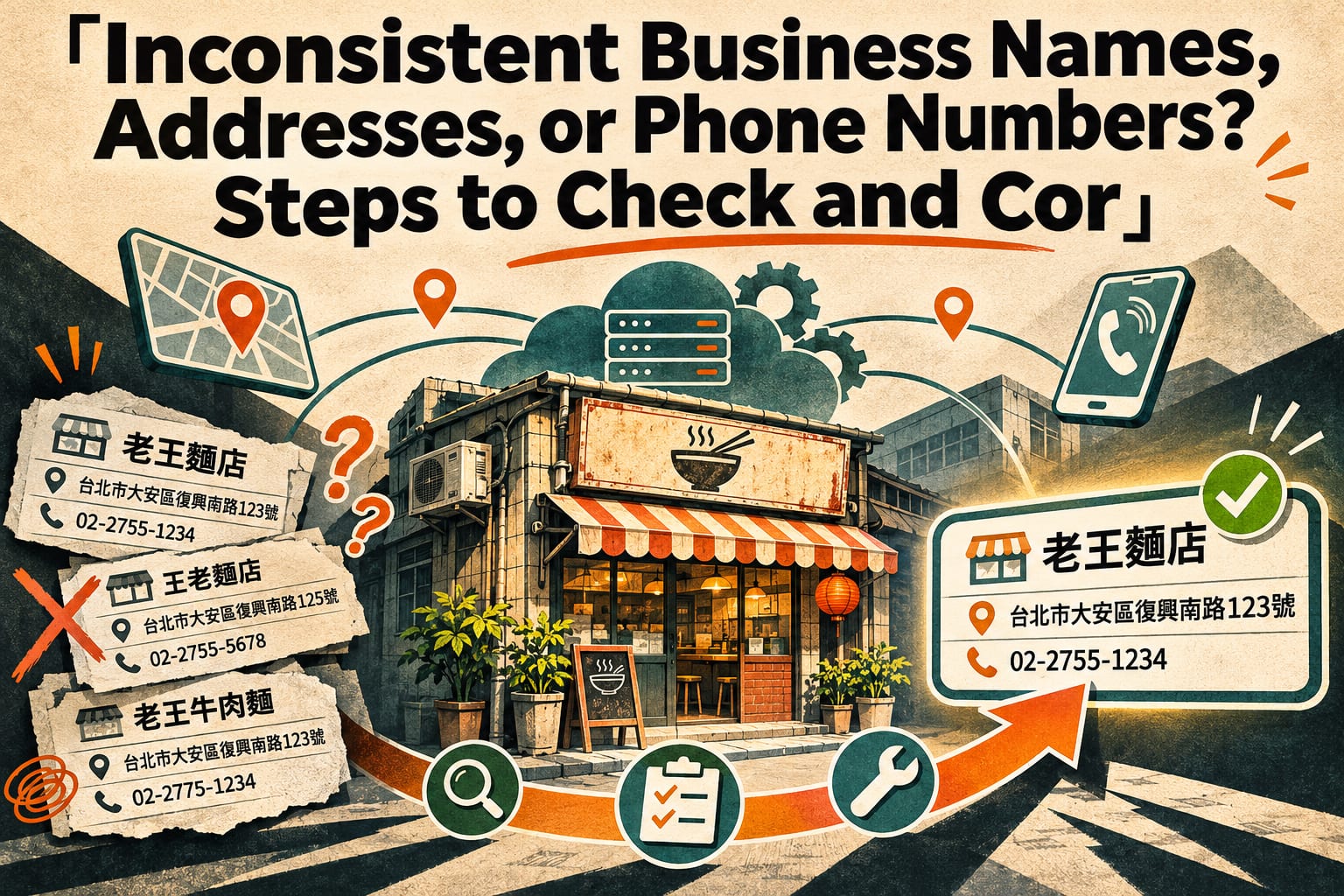
- Providing contradictory information across platforms: Correct addresses, opening hours, and fees before adding new articles.
- Treating promises of exposure as guarantees: Before outsourcing, require a clear list of deliverables and acceptance criteria; pages, content, and settings can be checked, but they cannot be used to guarantee ChatGPT's answers.
Frequently Asked Questions
Can I Start Without an Official Website?
Yes. Start by completing your public business profiles and social media descriptions, making sure the core information is visible even when logged out. An official website makes it easier to maintain content in one place, but creating one does not itself guarantee recommendations.
Do I Have to Hire an Engineer to Add Special Markup?
First, get your public text, information consistency, and accessibility in order, then assess technical adjustments. Structured data can help convey information, but it is not a switch for recommendations; follow the latest relevant official guidance for implementation specifications.
Can Asking ChatGPT Repeatedly Make It Remember My Business?
Do not treat repeated conversations as a recommendation setting for other users. Providing information in your own conversation does not mean it will be used in answers to other people; prioritize improving public, verifiable information.
How Long Will It Take to See Results?
There is no guaranteed number of days. Website updates, information retrieval, and answer generation are separate stages. You can check your core information and test records on a fixed monthly schedule, first tracking whether errors have been corrected and inquiries have become more precise, then observing where actual customers come from.