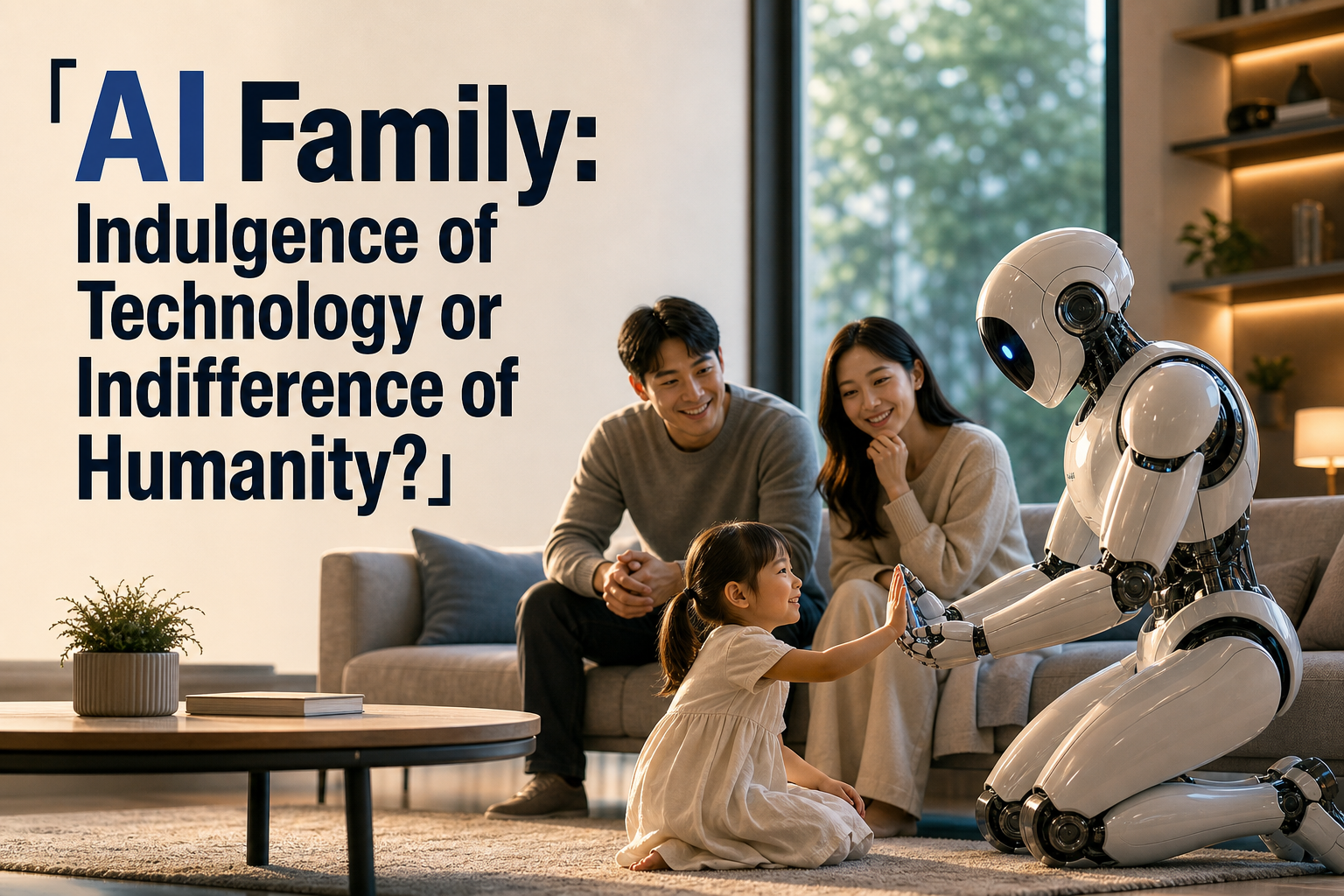
In China, the first bionic robot has successfully pre-sold over 3,000 units, priced at up to 900,000 TWD. This is not a plot from a science fiction movie, but a reality happening in the current market. With the advancement of AI, tech companies are beginning to enter the realm of human emotional life, designing bionic robots to exist as family members.
But, is this truly an extension of human emotions, or an escape from them? Imagine considering a combination of metal and plastic as family; this reflects not the progress of technology, but the poverty of human real emotions. Are such products truly satisfying human emotional needs, or are they merely covering up inner emptiness?
Definition of Family: Emotion or Function?
Generally speaking, family should be an attachment of emotions, resonating with laughter and tears. However, what these bionic robots achieve is merely functioning under cold logic. For example, if your child no longer communicates with you but chooses to share emotions with a bionic robot, what does that mean?
One interpretation is that this choice weakens emotional connections. People choose bionic robots simply out of a desire to be understood and supported, yet they do not want to face the complexities of real relationships. Conversely, this could also be an evolution of human emotions, where future families are no longer based on blood ties, but rather on choices. What consequences will this emotional choice bring?
Humanization of AI and Dehumanization of Humanity
AI technology is advancing rapidly, and bionic robots are continuously improving, but it prompts reflection: Are these technologies gradually stripping away human emotional communication abilities? In this high-tech era, people seem to increasingly rely on machines, gradually losing the ability for face-to-face communication. Imagine if in the future, people choose bionic robots over friends and family for emotional interaction; how should we then define the value of emotions?
Bionic robots may not be able to understand true pain and joy; does this mean that over time, we have gradually accepted algorithm-based emotional communication, no longer valuing the real interpersonal relationships that require time and effort to cultivate?
Reshaping the Future of Human Emotions
The development of technology undoubtedly enhances the convenience of life, but I tend to believe that this convenience may, in an invisible way, devalue our appreciation for emotions. Rather, we should focus on how to maintain real connections and the warmth of emotions between people amidst the tide of technology. If bionic robots truly become our family, what will future families look like? Among these cold metals, what is lacking is our most precious emotional resource.