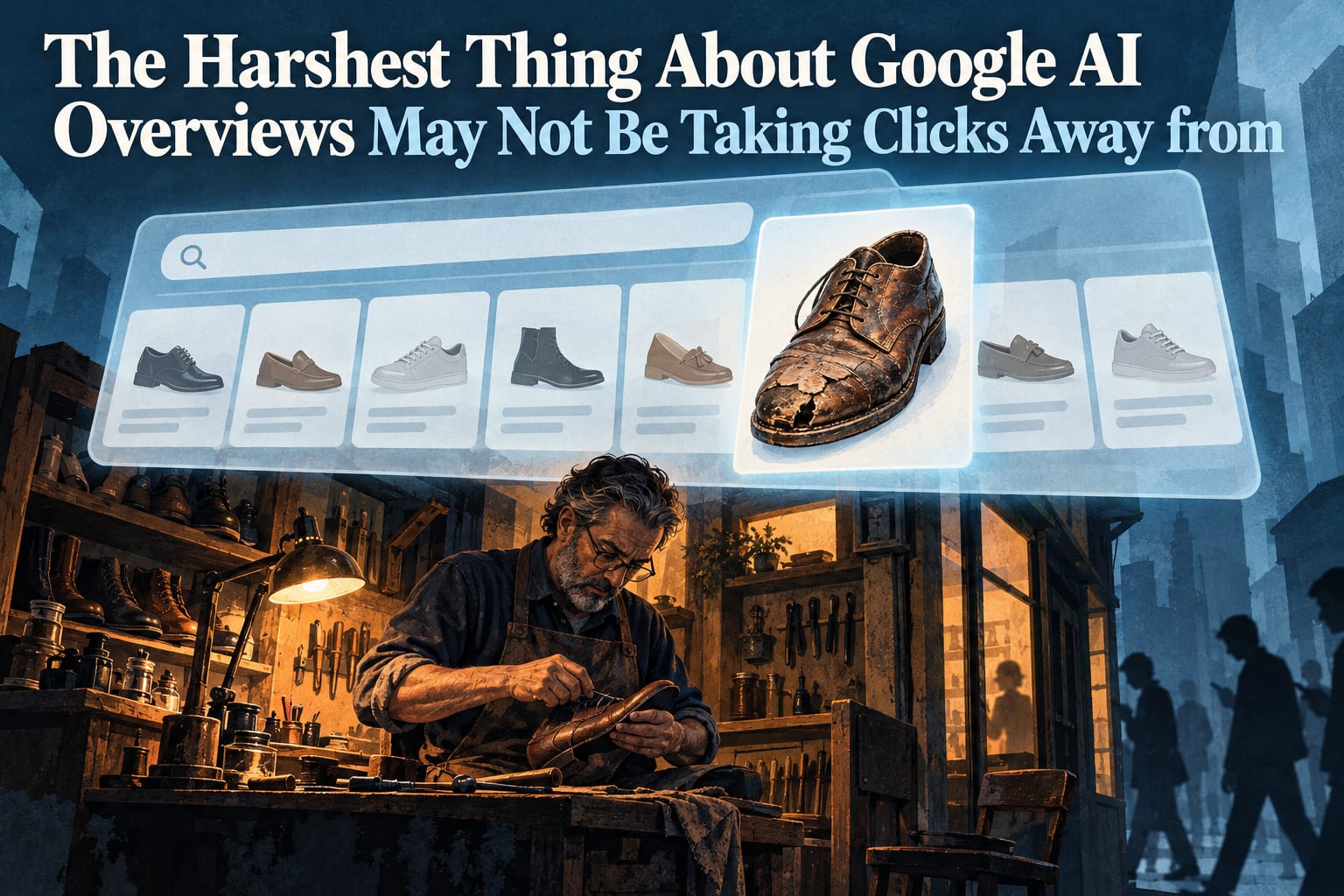
A shoe repair shop’s most valuable skill may be knowing, with one glance at a sole, whether a pair of shoes is still worth saving. But what search systems find easier to understand is “recommended shoe repair in Taipei,” “transparent pricing,” and “quick turnaround.” A seasoned cobbler’s judgment must first be translated into sentences the platform recognizes before it has a chance to make it into the answer.
I tend to think that Google AI Overviews’ deeper impact on small shops is that they may push “being seen” and “being understood” further and further apart. Fewer clicks are merely the damage visible on paper; businesses beginning to describe themselves in ways that machines can easily summarize is the change that slowly seeps into how they operate.
One Fewer Click Doesn’t Necessarily Mean One Fewer Customer
First, let’s dismantle an assumption that rolls easily off the tongue in marketing circles: website traffic equals business.
Suppose someone searches “can cracked leather shoe soles be repaired,” and an AI Overview explains the repair methods first. They read it and leave. The shop’s instructional article loses a click, and certainly loses an opportunity to demonstrate its expertise. But someone else might read the overview, then look up the shop’s name, call, and walk straight in carrying their shoes. Neither search may leave the record you were hoping for in your website reports.
This doesn’t mean AI Overviews necessarily bring customers to small shops. It reminds us that looking up information, choosing a shop, and actually making a purchase are different actions; AI Overviews also cannot be directly equated with map recommendations. Counting every search without a click as a lost order obscures the real problem.
What really puts me on alert is how much businesses can still participate in that selection process in between.
Who Cuts Your Expertise Down to One Sentence?
Imagine two shoe repair shops. One has a neatly organized page, with services, price ranges, and frequently asked questions all laid out. The other has a bare-bones website, but regularly takes on difficult jobs others won’t handle and even advises customers against wasting their money.
The first is easier for machines to recognize, and that makes sense: customers need clear information too. The question is whether easily recognizable features will gradually come to be treated as reasons to recommend a shop. Between “complete information” and “reliable craftsmanship” lies a pair of shoes that has actually been worn out.
When an overview compresses the details, a professional caveat like “I can’t guarantee the repair will hold with this material” may be harder to retain than “offers repairs for a wide range of shoes.” If businesses discover that the latter gets them more exposure, they have an incentive to make their descriptions tidier and more definite. Customers get crisp answers, while seasoned cobblers lose the room to explain exceptions.
This is a tension between convenience and expertise that cannot be resolved simply by saying “create good content.”
Marketing Costs Now Include Translation Work
For small shops, freelancers, and professionals, making themselves understandable to AI takes labor: organizing case studies, updating the scope of their services, explaining the conditions under which those services apply, and checking whether search results misrepresent them. This work is useful, and someone has to spend time doing it.
If marketing advice boils down to “write more content AI likes,” the cost of platforms changing the gateway to information falls entirely on businesses. Repair shoes by day, tutor the search system by night; exposure is not guaranteed, but outdated information counts as your failure. That expense should at least appear in the marketing budget.
I would be more interested in knowing which shop, which person, and which specific skill new customers ultimately remember. Website clicks still matter, but they cannot answer this question on their own: did your expertise actually make it through that overview?
At dusk, a customer walks in carrying a pair of leather shoes with cracked soles, a neatly compiled explanation of repairs still on their phone. The cobbler turns the shoes over, pauses for two seconds, and says, “This pair is a little different from what it says there.” The customer hasn’t put away the phone, and the cobbler hasn’t taken out the tools yet.